ME-004 / COMPETITION ROBOTICS
FIRST Robotics Competition Robot
TIMELINE
2023–2025 SEASONS
PROJECT TYPE
COMPETITION ROBOTICS
BUILD CYCLE
6-WEEK DESIGN-TO-COMPETE
FOCUS
MECHANICAL SYSTEMS
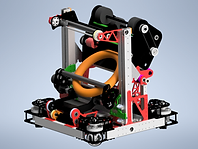
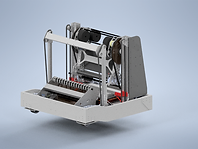
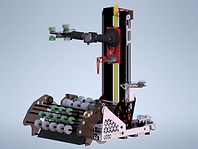
ROBOT DEVELOPMENT / CAD + COMPETITION HARDWARE
COMPETITION RECORD / WINNER BANNERS
Five Regional Wins
COMPETITION RECORD / WINNER BANNERS
Five Regional Wins
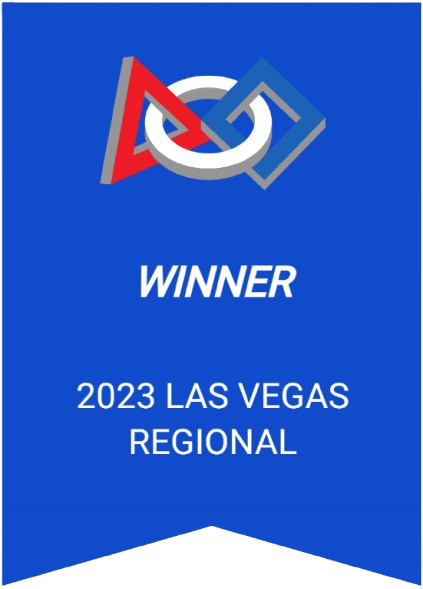


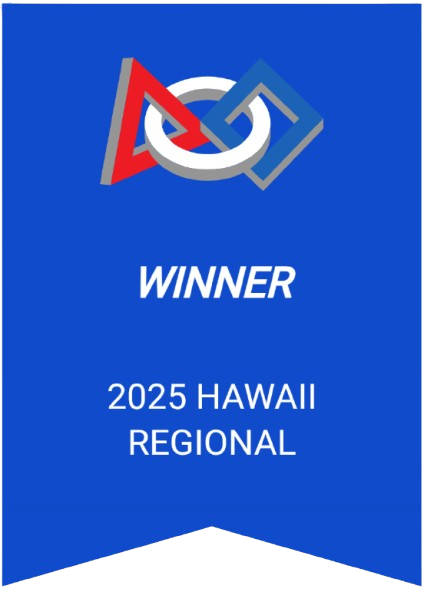
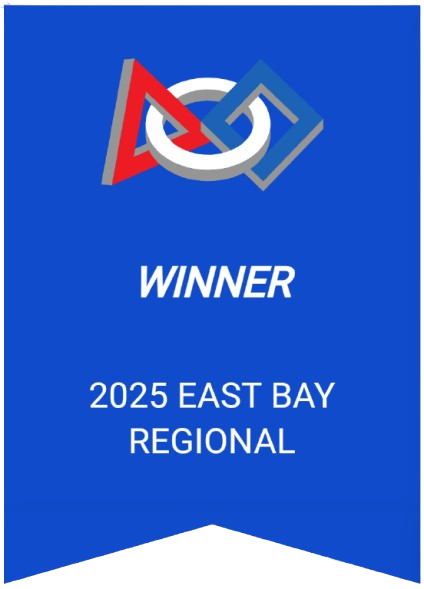
Across the 2023–2025 seasons, the team earned five regional wins, reflecting the effectiveness of the broader design, fabrication, iteration, strategy, and competition process.
TEAM / DESIGN, BUILD + COMPETITION
FRC is a collaborative engineering environment involving mechanical, electrical, software, drive-team, and strategy roles. The finished robots resulted from coordinated team effort under a shared design, build, testing, and competition schedule.
01 / FRC DESIGN PROBLEM
FIRST Robotics Competition demands a field-ready robot designed, fabricated, assembled, and iterated under an extremely compressed schedule while balancing performance, reliability, repairability, and a strict 110 lb weight limit.
FIRST Robotics Competition, or FRC, is an international high-school engineering competition in which teams receive a new game challenge each season and must design a robot around that year’s scoring objectives. The completed robot must combine movement, game-piece manipulation, structural support, controls, electronics, and match strategy within one competition-ready system. Because the game changes every year, the engineering process begins again each season rather than relying on one permanent robot design.
02 / DESIGN-TO-COMPETE PROCESS
The season begins with game analysis. The team identifies the highest-value scoring tasks, studies field constraints, and decides which capabilities are realistic within the available schedule, weight, manufacturing resources, and team capacity.
Strategy then becomes mechanical architecture. Drivetrain, manipulators, structural members, electronics, and game-specific mechanisms must fit into one robot while remaining accessible enough to assemble, maintain, and repair during competition.
A design is evaluated not only by what it could accomplish in theory, but by whether it can be manufactured quickly, survive repeated match cycles, stay within the 110 lb weight limit, and contribute meaningfully to match performance.
My experience spans three FRC games—2023 Charged Up, 2024 Crescendo, and 2025 Reefscape—each requiring a different strategic and mechanical response.
03 / MY MECHANICAL CONTRIBUTION
My work focused primarily on the mechanical and machinery side of the robot across multiple seasons. I contributed to CAD-based mechanism development, design iteration, component packaging, fabrication, assembly, and preparation of competition-ready hardware.
I developed proficiency with CNC machining, milling, drill-press work, part preparation, and mechanical assembly. These manufacturing processes were directly connected to the design work: dimensions, tolerances, material choices, mounting methods, and tool access affected whether a mechanism could be produced accurately and revised within the competition schedule.
I also approached mechanism development with match strategy in mind. A mechanism needed to do more than function—it needed to improve scoring capability, remain below the 110 lb limit, survive repeated use, integrate with other subsystems, and be serviceable between matches.
Because FRC robots are team-built systems, my contribution formed one part of a larger collaborative process. My primary role was helping translate mechanical concepts and strategic priorities into manufacturable, assembled hardware that could operate reliably in competition.
04 / ENGINEERING LESSONS
FRC taught me that the strongest mechanism is not necessarily the most ambitious one. It is the mechanism that can be built on time, integrated with the rest of the robot, repaired under pressure, and trusted during a match.
I learned how closely CAD and manufacturing are connected. A design that ignores machining access, tolerances, assembly order, fastening, or maintenance can create significant problems even when the concept appears mechanically sound.
The competition environment also strengthened my ability to make tradeoffs quickly. Weight, complexity, reliability, performance, manufacturability, and build time constantly competed with one another, so every feature had to justify its place on the robot.
Most importantly, I learned to view the robot as one integrated system. Changes to one mechanism could affect weight distribution, structural support, wiring access, center of mass, serviceability, and the space available to every other subsystem.
TOOLS + TECHNOLOGIES