ME-001 / UNDERWATER ROBOTICS
Magnetic-Propulsion ROV
TIMELINE
MAY–AUG 2026
PROJECT TYPE
INDEPENDENT RESEARCH
CORE INNOVATION
MAGNETIC TORQUE COUPLING
DISCIPLINE
MECHATRONICS
CAD RENDERS / ASSEMBLY
3 VIEWS
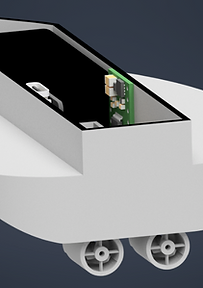
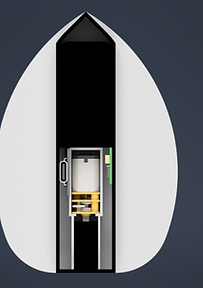
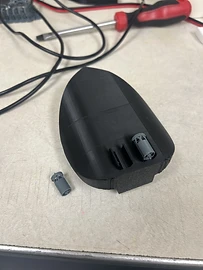
01 / DESIGN PROBLEM
Millimeter-scale underwater robots require propulsion systems that fit within extremely limited volume while protecting sensitive electronics from water.
Conventional shaft-driven systems require a rotating penetration through the hull, introducing seals, bearings, alignment requirements, friction, and potential leakage points that become increasingly difficult to manage as the vehicle is miniaturized.
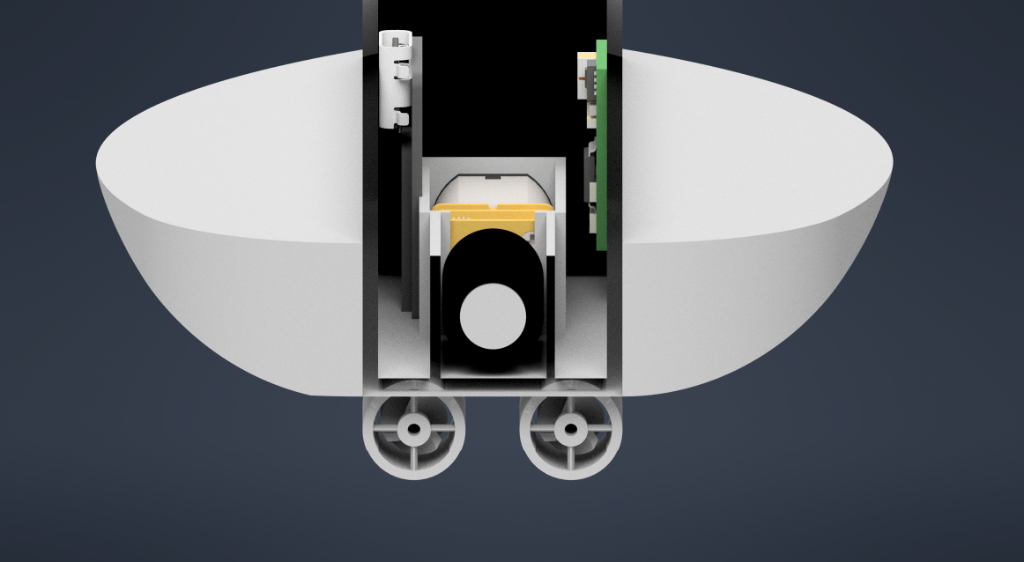
SYSTEM CONCEPT / CONTACTLESS DRIVETRAIN
02 / DEVELOPMENT PROCESS
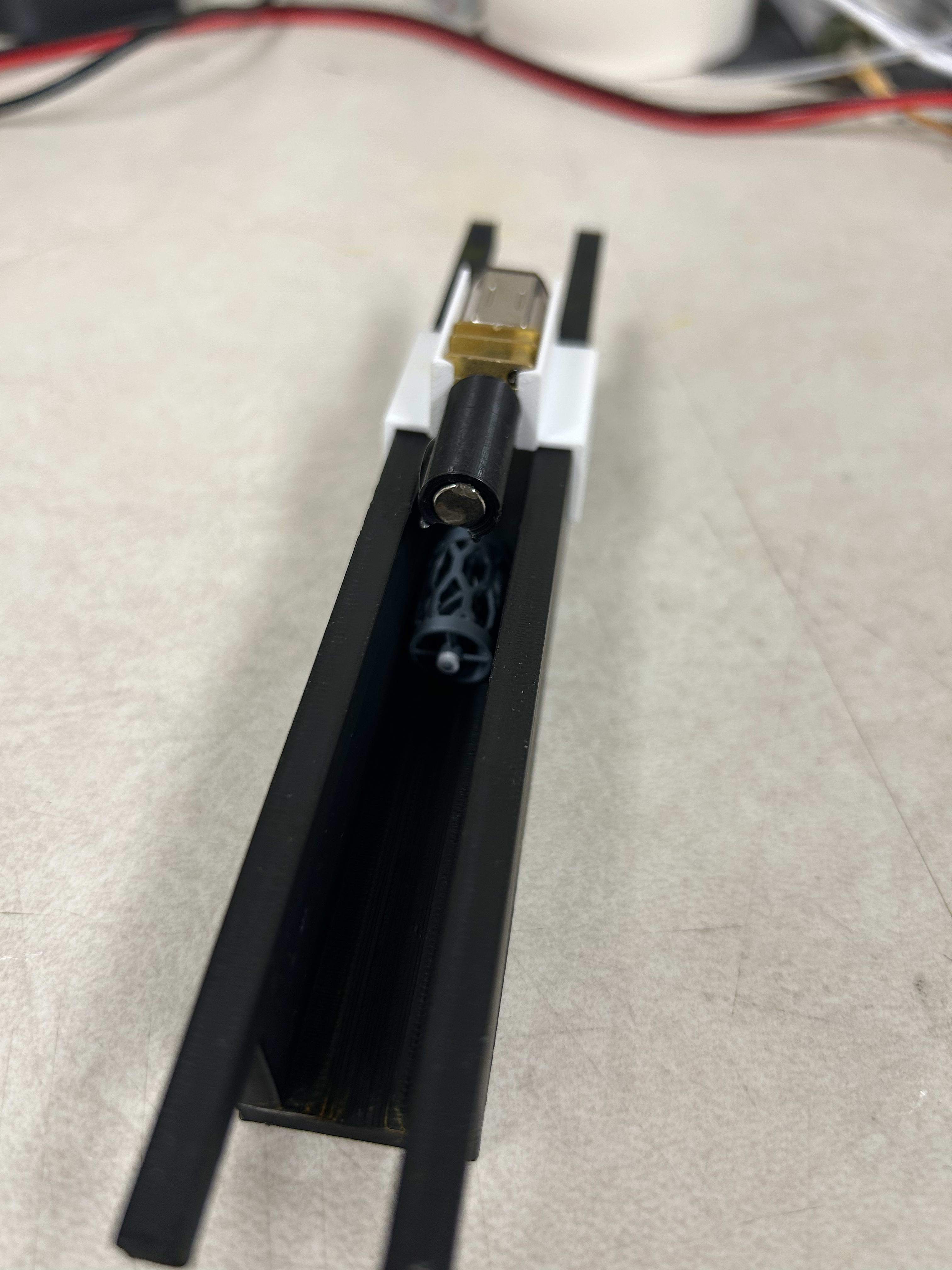
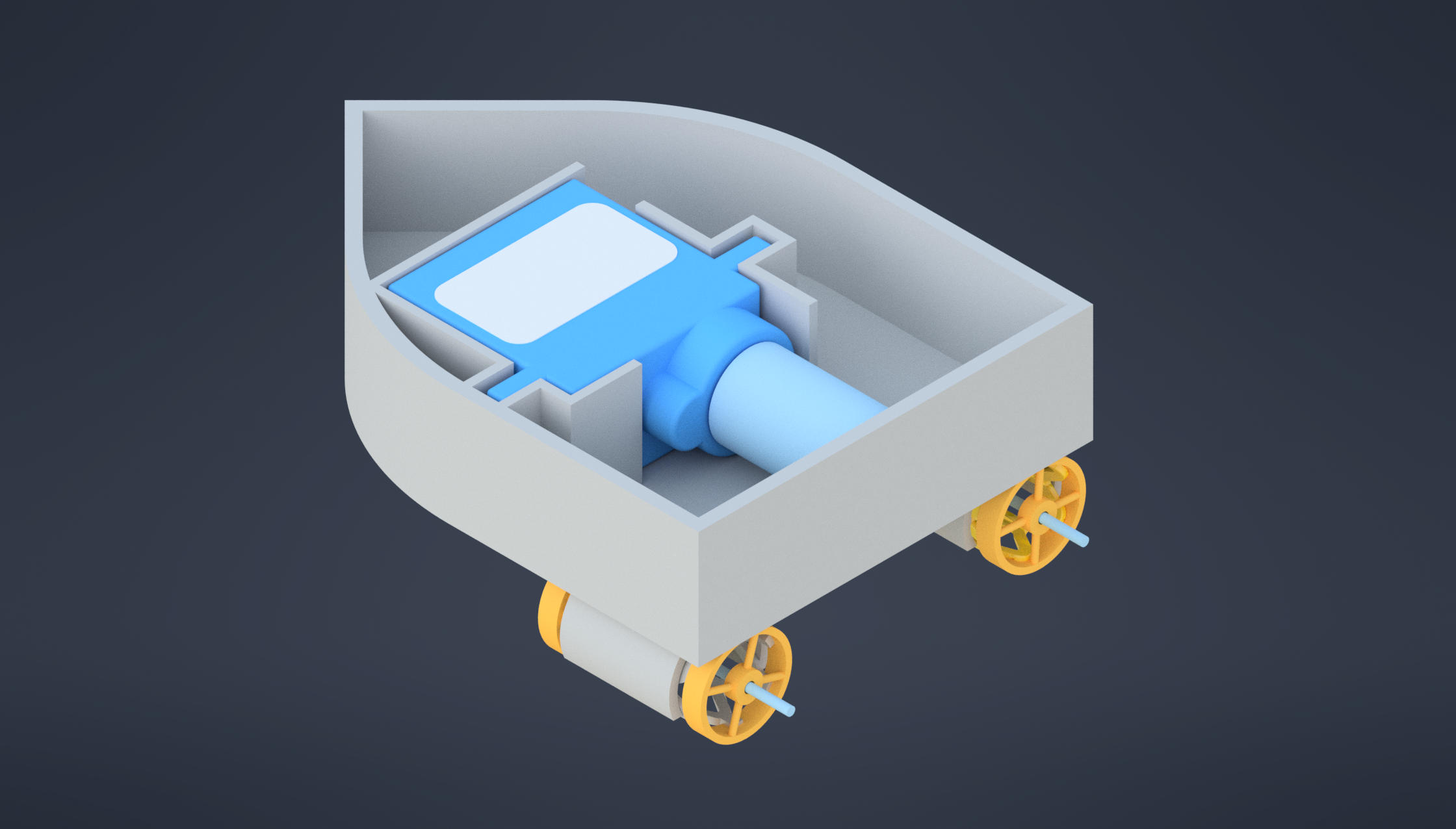
As part of my work in the SAIL Lab, I investigated magnetic torque coupling as a compact alternative to a conventional sealed driveshaft for millimeter-scale underwater vehicles. An internal motor rotates a drive magnet inside the protected electronics enclosure, while magnetic forces transmit torque through a stationary hull barrier to a separate external rotor. This allows mechanical power to reach the surrounding water without requiring a continuous rotating shaft to penetrate the enclosure.
I developed the system through repeated design, fabrication, and testing cycles. The iterations focused on magnetic orientation, coupling distance, rotor alignment, motor selection, structural packaging, electronics integration, power delivery, and control. Because the available space was extremely limited, changes to one subsystem frequently affected several others. Reducing the housing thickness could strengthen the magnetic coupling, for example, but also affected structural rigidity, component clearance, and manufacturability.
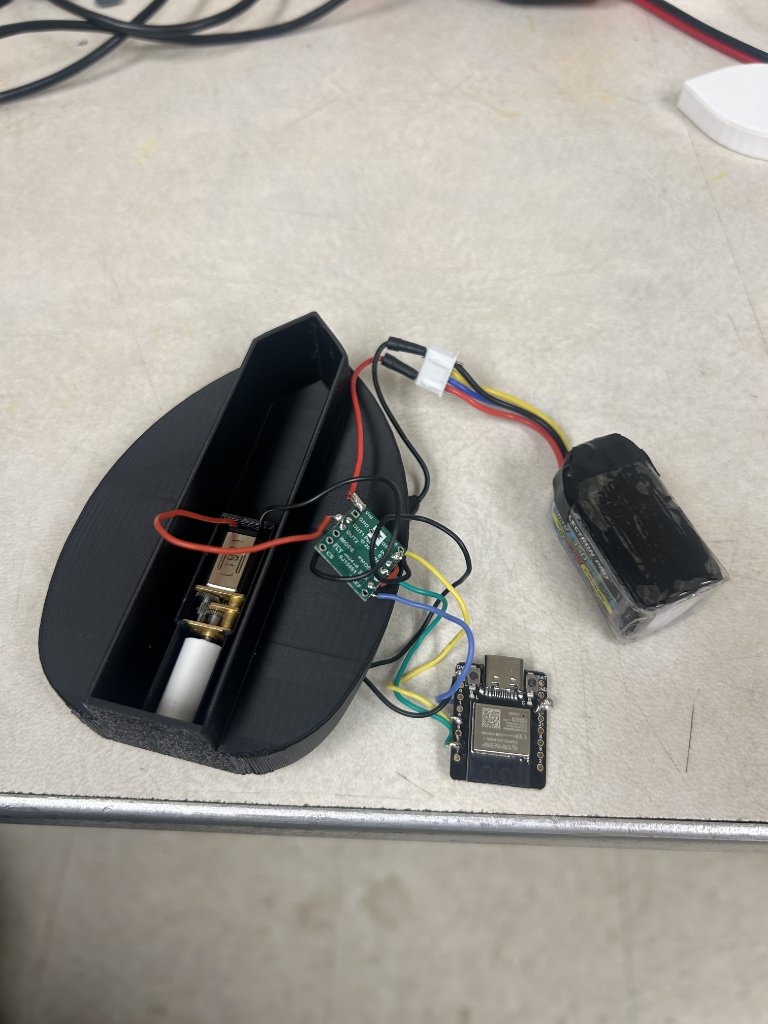
The electrical architecture progressed from basic benchtop motor tests to a self-contained battery-powered system with onboard motor control and Bluetooth communication. Each subsystem was tested independently before being integrated into the complete vehicle prototype.
03 / KEY DESIGN DECISIONS
Magnetic transmission through a stationary barrier. Separating the enclosed motor from the external rotating assembly removed the need for a direct shaft penetration and reduced the number of dynamic sealing interfaces.
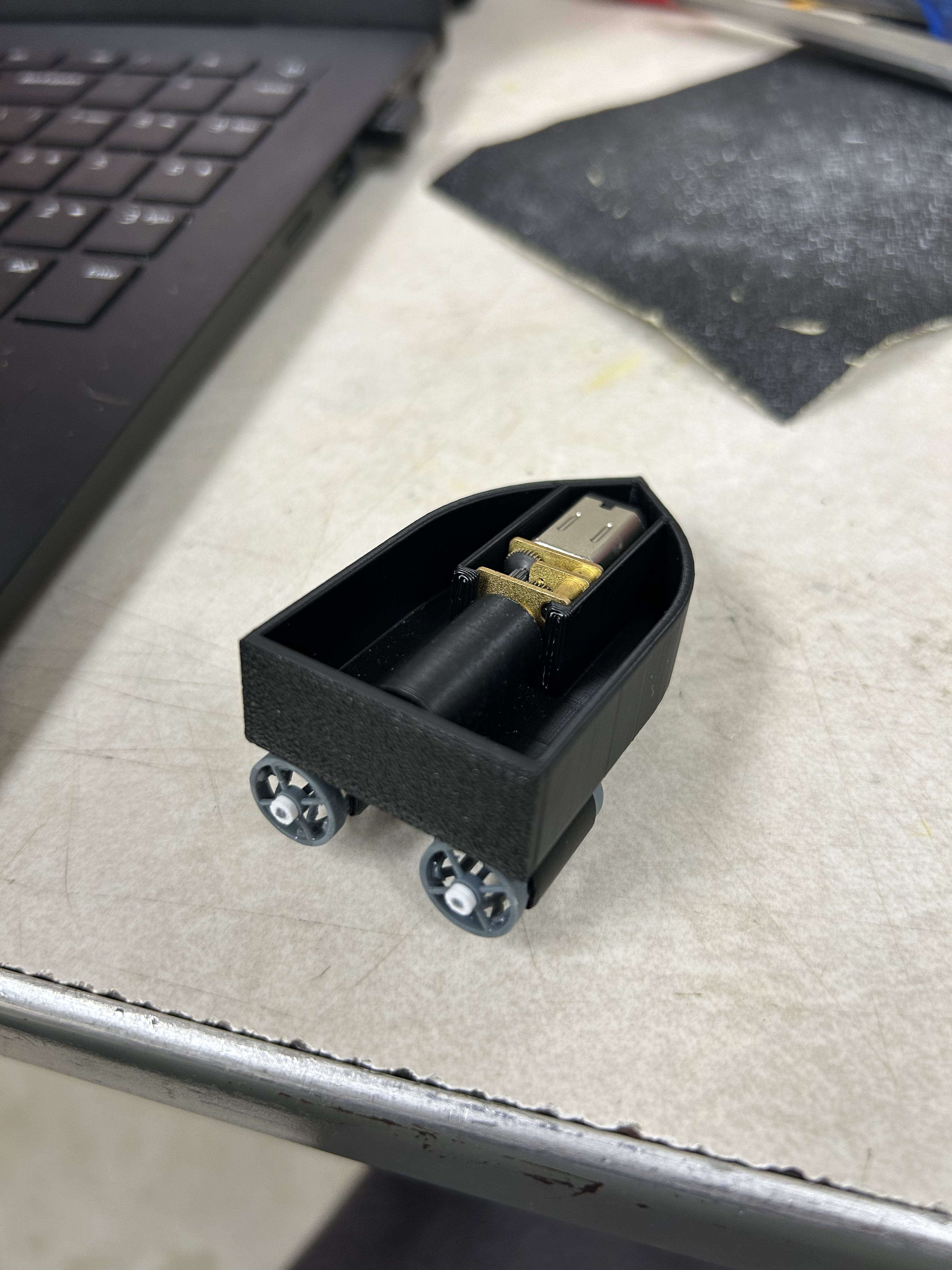
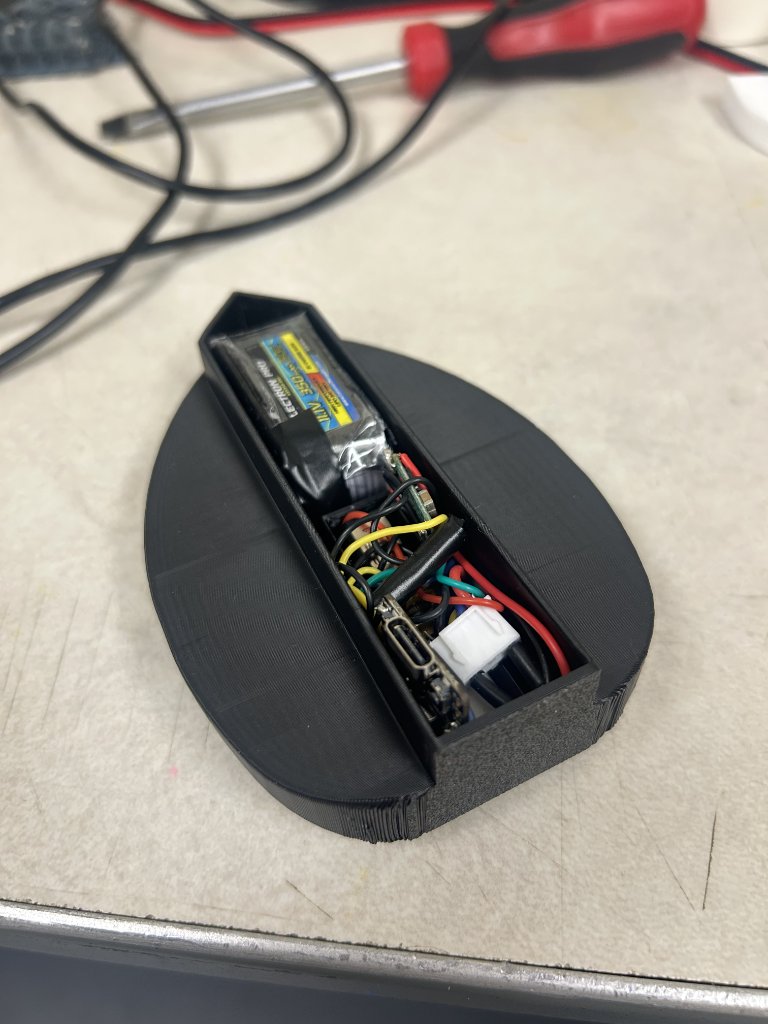
Millimeter-scale component integration. The motor, battery, motor driver, microcontroller, wiring, magnetic drivetrain, and structural enclosure had to function within a tightly constrained vehicle volume. Component placement was therefore treated as part of the mechanical design rather than as a later electronics task.
Modular subsystem testing. I evaluated motor operation, magnetic coupling, power delivery, wireless communication, and external rotation separately before combining them. This helped distinguish mechanical failures from electrical and software issues.
Wireless prototype control. The system evolved from direct wired testing to Bluetooth Low Energy communication between an onboard microcontroller and a computer-based game-controller interface, allowing forward and reverse motor commands without a physical control tether.
SYSTEM ARCHITECTURE / COMPONENT PACKAGING
04 / PROTOTYPE OUTCOME
The resulting millimeter-scale prototype integrated a compact chassis, onboard battery power, motor-drive electronics, Bluetooth control, and two externally mounted magnetic propulsion modules. Testing demonstrated that motor rotation could be transmitted through a stationary enclosure wall to an external rotating assembly without a continuous mechanical shaft connecting the two sides.
The project established a functional proof of concept for contactless torque transmission within a highly constrained underwater robotic platform. It also identified the primary challenges for continued development: maintaining magnetic synchronization under hydrodynamic load, reducing the size of the propulsion assembly, improving structural alignment, balancing the vehicle, waterproofing the complete electronics enclosure, and evaluating locomotion through controlled underwater testing.
FUNCTIONAL DEMONSTRATION
05 / WHAT I LEARNED
The largest lesson was that miniaturization changes the relationship between every subsystem. At the millimeter scale, a small change in wall thickness, wire routing, magnet spacing, battery position, or component orientation can alter the mechanical, electrical, and hydrodynamic behavior of the entire vehicle.
I also learned that successful subsystem tests do not automatically produce a successful integrated system. A motor may operate correctly on a bench, magnets may couple reliably in air, and the control software may send accurate commands, but the complete assembly behaves differently once structural tolerances, water resistance, battery limitations, and packaging constraints interact.
Separating the project into testable subsystems made failures easier to diagnose. Designs that appeared feasible in CAD often revealed new constraints after fabrication, so physical testing became the primary basis for each subsequent iteration.
06 / NEXT ITERATION
Future work will focus on converting the integrated proof of concept into a controlled swimming platform. Planned improvements include reducing propulsion-module volume, decreasing the separation between the internal and external magnets, improving rotor alignment, developing a more compact waterproof electronics enclosure, and refining the internal mass distribution for stable flotation.
The next testing phase will measure vehicle speed, thrust response, directional control, power consumption, magnetic synchronization, and operating duration under repeatable underwater conditions. Additional control development may include differential thrust steering, onboard sensing, closed-loop motor control, and a dedicated desktop application for game-controller operation.
07 / MY CONTRIBUTION
Working within the SAIL Lab, I developed and integrated the magnetic propulsion concept for a millimeter-scale underwater robotic platform. I modeled the vehicle and drivetrain components in CAD, fabricated and assembled the prototypes, selected and integrated the motor-control electronics, programmed the embedded and computer-side control systems, and conducted iterative mechanical, electrical, and wireless-control testing.
I used the results from each prototype to revise the magnetic arrangement, housing geometry, component packaging, power system, and control architecture. Propeller geometry and hydrodynamic optimization were developed as a related research effort and are documented separately in the Propeller R&D project.
VIEW RELATED PROJECT: PROPELLER R&D →TOOLS + TECHNOLOGIES