SD-003 / MECHANICAL ADAPTER DESIGN
Permanent Magnet Bayonet Lock
TIMELINE
MAY 2026
PROJECT TYPE
CUSTOM ADAPTER
KEY FEATURE
BAYONET LOCKING INTERFACE
FOCUS
TOLERANCE + FIT
CAD RENDERS / ASSEMBLY
3 VIEWS
01 / DESIGN OBJECTIVE
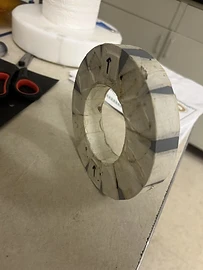
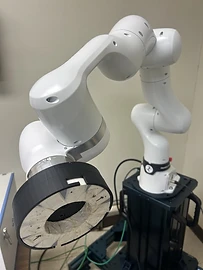
The objective was to create a custom housing that securely attached an existing permanent magnet to a robotic arm. The adapter needed to support the magnet, connect to the arm, and allow the assembly to be installed and removed without relying on a permanent attachment method.
02 / BAYONET LOCK + TOLERANCE DEVELOPMENT
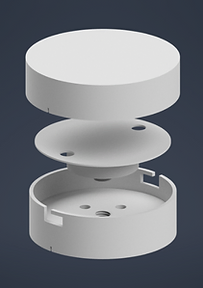
I designed a bayonet-style locking interface in which tabs enter matching slots and rotate into a retained position. There is a secondary screw-on cover to ensure the magnet doesn’t rotate within the housing using a friction fit. The mechanism provided a compact and repeatable connection while avoiding a more complicated fastening process.
The most important part of the development was tuning the fit between the locking features. Small tolerance changes affected whether the adapter was too loose, too difficult to rotate, or unable to lock completely. I revised the geometry until the printed components could engage securely while remaining removable.
03 / CAD DEVELOPMENT + OUTCOME
The project helped me practice modeling functional hardware rather than only creating general shapes. I developed new CAD methods for threaded features, screw interfaces, clearances, locking tabs, and multi-part assemblies.
The final adapter successfully connected the permanent magnet to the robotic arm and provided a practical mounting solution based on the equipment already available. Although the project was small, it strengthened my understanding of how tolerances, fastening, and assembly behavior determine whether a CAD design works as a physical mechanism.